




How does ultrasonic treatment improve the quality of aluminum investment castings?
 Jul 07, 2025|
 Hey there! I'm a supplier in the Aluminum Investment Casting industry. Today, I wanna chat about how ultrasonic treatment can seriously boost the quality of aluminum investment castings.
First off, let's get a bit of background. Aluminum investment casting is a super - useful process. It allows us to create complex and precise parts with excellent surface finish. You can learn more about Aluminum Investment Casting on our website. This process involves making a wax pattern, coating it with a ceramic shell, melting the wax out, and then pouring molten aluminum into the shell. Sounds simple, right? But there are always ways to make it even better, and that's where ultrasonic treatment comes in.
How Ultrasonic Treatment Works
Ultrasonic treatment uses high - frequency sound waves. When these waves are introduced into the molten aluminum during the casting process, they create a whole bunch of cool effects. One of the main things is cavitation. Cavitation is when tiny bubbles form and collapse in the molten metal. This might seem like a small thing, but it has a huge impact.
The collapse of these bubbles generates a lot of energy. This energy helps to break up any oxide films that might be on the surface of the molten aluminum. Oxide films can be a real pain in the butt because they can cause defects in the final casting, like porosity and inclusions. By breaking up these films, ultrasonic treatment ensures that the molten aluminum can flow more freely and fill the mold cavity completely.
Improving Grain Structure
Another awesome benefit of ultrasonic treatment is its effect on the grain structure of the aluminum casting. In a normal casting process, the grains in the aluminum can be quite large and uneven. Large grains can lead to reduced mechanical properties, like lower strength and ductility.
But when we use ultrasonic treatment, the cavitation and the energy it releases cause the grains to nucleate and grow in a more controlled way. The high - frequency vibrations make it easier for new grains to form, and they also prevent existing grains from growing too large. As a result, we get a much finer and more uniform grain structure. This finer grain structure means that the castings have better mechanical properties, such as higher strength, better hardness, and improved fatigue resistance.
Reducing Porosity
Porosity is one of the most common defects in aluminum investment castings. It can occur due to a variety of reasons, like gas entrapment during the pouring process or shrinkage during solidification. Porosity can seriously weaken the casting and make it less reliable.
Ultrasonic treatment helps to reduce porosity in several ways. First, the cavitation effect helps to release any dissolved gases in the molten aluminum. As the bubbles collapse, they create a pressure wave that forces the gas out of the metal. Second, the improved flow of the molten aluminum due to the breaking up of oxide films means that there are fewer places for gas to get trapped. And finally, the more uniform solidification process resulting from the refined grain structure also reduces the likelihood of shrinkage porosity.
Enhancing Surface Finish
The surface finish of an investment casting is really important, especially for parts that are used in applications where aesthetics or low friction are key. Ultrasonic treatment can have a positive impact on the surface finish of aluminum investment castings.

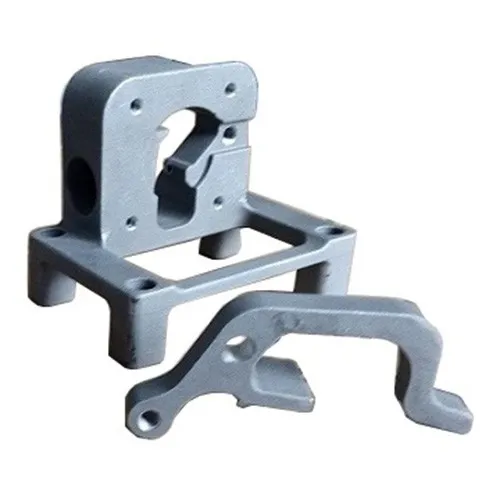
Since it improves the flow of the molten aluminum and reduces the chances of defects like porosity and inclusions, the castings are more likely to have a smooth and clean surface. The better the flow, the more accurately the aluminum can replicate the details of the mold, resulting in a better surface finish. You can check out some of our Investment Casting Aluminum Parts to see the kind of quality we can achieve.
Case Studies
Let me share a couple of real - world examples to show you how effective ultrasonic treatment can be. We had a customer who needed a set of complex aluminum parts for a high - performance engine. The parts had tight tolerances and required excellent mechanical properties.
Before using ultrasonic treatment, we were getting a high rejection rate due to porosity and poor surface finish. But after implementing ultrasonic treatment in our casting process, the rejection rate dropped significantly. The parts had a much finer grain structure, which improved their strength and fatigue resistance. The surface finish was also much better, meeting the customer's strict requirements.
Another case was a customer who needed aluminum parts for a precision instrument. These parts needed to be as defect - free as possible. Ultrasonic treatment helped us to reduce the number of inclusions and improve the dimensional accuracy of the parts. The customer was really happy with the final product, and we were able to build a long - term relationship with them.
Cost - Benefit Analysis
Now, you might be thinking, "This all sounds great, but is it worth the cost?" Well, let me tell you, in most cases, it absolutely is.
Yes, there is an initial investment in the ultrasonic equipment. But when you consider the savings in terms of reduced scrap rates, fewer reworks, and the improved quality of the final product, it's a no - brainer. The reduced scrap rates mean that we're using less raw material, which saves money. And since the castings have better mechanical properties and surface finish, they can command a higher price in the market.
In addition, the improved quality means that our customers are more likely to be satisfied, which leads to repeat business and a better reputation in the industry. So, in the long run, the cost of implementing ultrasonic treatment is more than offset by the benefits.
Conclusion
In conclusion, ultrasonic treatment is a game - changer in the world of aluminum investment casting. It offers a whole bunch of benefits, from improving the grain structure and reducing porosity to enhancing the surface finish and mechanical properties of the castings. As a Investment Aluminum Casting Parts supplier, we've seen firsthand the positive impact that ultrasonic treatment can have on our products.
If you're in the market for high - quality aluminum investment castings, I highly recommend considering parts that have been treated with ultrasonic technology. Whether you need parts for the automotive industry, aerospace, or any other application, the improved quality and performance of these castings can make a big difference.
If you're interested in learning more about our aluminum investment casting services or want to discuss a specific project, don't hesitate to reach out. We're always happy to have a chat and see how we can help you get the best - quality castings for your needs.
References
- Campbell, J. (2003). Castings. Butterworth - Heinemann.
- Flemings, M. C. (1974). Solidification Processing. McGraw - Hill.
- Grugel, R. N., & Hunt, J. D. (2000). Solidification. Institute of Physics Publishing.