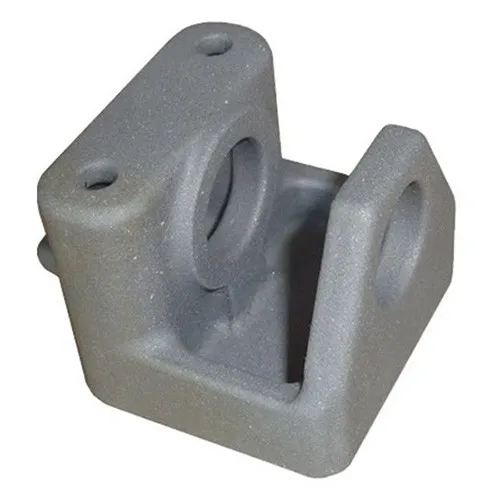
A mechanical part is a mechanical component or element designed to perform a specific function, such as providing power, transmitting motion, supporting heavy loads, controlling motion, or directing the flow of fluids or gases. Examples of mechanical parts include gears, pulleys, bearings, pistons, cylinders, valves, pumps, motors, sensors, actuators, and electronic circuits. These parts can be made from a variety of materials, such as metals, plastics, ceramics, and composites, and can be manufactured through a variety of processes, such as casting, forging, machining, molding, and welding. Mechanical parts generally include alloy steel investment casting parts, stainless steel investment casting parts, etc.
01
High Precision
Investment Casting Metal Parts manufactures parts with extremely high precision. During the investment casting process, the process of gradual erosion of molds, prototypes and molds is precisely controlled, ultimately creating high-precision, texture-rich products.
02
Less Machining
Compared with other traditional manufacturing technologies, Investment Casting Metal Parts is believed to produce fewer parts and require fewer machining processes, thereby reducing procurement costs. Investment in casting details and commissioning of geometries results in a high degree of precision in the geometries produced by the casting, thereby reducing errors due to machining.
03
Balancing Complex Structure and Weight
Investment Casting Metal Parts tends to manufacture components with complex structures and high weight. Not only do the parts look better and have better precision, but their strength and diode capacitance characteristics can also be improved in the product. Additionally, investment casting is proven to be a more environmentally friendly production method, producing less waste and chemical contamination.
04
Tight Tolerances
Investment casting has a tolerance of 0.003 inches, which is tighter than most casting processes, such as die casting.

Carbon Steel Investment Cast Metal
Carbon steel investment cast metal is a commonly used material whose basic raw materials are composed of iron and carbon. Carbon steel metal is commonly used to produce machine parts, automotive parts and building components. Carbon steel investment cast metals are also widely used when manufacturing wind turbine blades.

Stainless Steel Investment Cast Metal
Stainless steel investment cast metal is a high-quality material that is characterized by a high degree of resistance to corrosion. Due to its ability to withstand high temperatures and pressures, stainless steel investment cast metal is often used to produce aircraft engine parts, high-speed trains and chemical industry equipment.

Aluminum Alloy Investment Cast Metal
Aluminum investment cast metal is a lightweight material with excellent rigidity and strength. Aluminum alloy investment cast metal is commonly used to produce aerospace components, internal gas turbine components, and marine parts. With its unique properties, aluminum alloy investment casting metals are also widely used in the automotive industry.

Nickel Base Alloy Investment Cast Metal
Nickel-based alloy investment cast metal is a material with high strength and high corrosion resistance. It is commonly used to make high-temperature components for automotive engines, ship piping equipment and equipment for oil and gas companies.
Wax Model Creation
The process begins with the creation of a wax model of the part that will be cast. This model can be made using a variety of methods, including CNC milling and 3D printing. Once the model is complete, it is attached to a wax sprue, which allows the molten metal to flow into the mold.
Ceramic Mold Creation
The wax model and sprue are then coated with multiple layers of ceramic material to create a mold. This ceramic shell can be made from a variety of materials, including silica, zircon, and alumina. Each layer is carefully applied and allowed to dry before the next layer is added.
Dewaxing
Once the ceramic shell is complete and fully dried, it is placed in a furnace where the wax is melted and removed. This step is called dewaxing, and it creates a cavity in the mold that will be filled with molten metal.
Casting
The ceramic mold is then heated to a temperature that exceeds the melting point of the chosen metal. Molten metal is poured into the mold using a vacuum or pressure casting process. The metal is allowed to solidify in the mold before the ceramic shell is broken away.
Finishing
Once the metal part has been removed from the mold, it may require finishing. This can include removing any excess material, smoothing rough surfaces, and adding any necessary modifications.

Stainless Steel
Stainless steel is a popular choice for investment casting due to its corrosion resistance, high strength, and versatility. Different grades of stainless steel can be used, such as 304, 316, 17-4 PH, and 440C, depending on the specific requirements of the application.

Carbon Steel
Carbon steel is widely used in investment casting for its high strength, good machinability, and cost-effectiveness. It is suitable for applications that do not require high corrosion resistance but demand strength and toughness, such as automotive components, machinery parts, and construction hardware.

Tool Steel
Tool steels, such as H13, D2, and A2, are commonly used for investment casting in applications that require high wear resistance, hardness, and dimensional stability. Tool steels are often used for producing molds or dies and parts that require excellent cutting, shearing, or forming performance.

Aluminum Alloys
Aluminum alloys, including A356, 356, 6061, and 7075, are lightweight materials with good strength-to-weight ratios, excellent corrosion resistance, and thermal conductivity. They find applications in aerospace, automotive, and other industries where weight reduction and good mechanical properties are important.

Copper Alloys
Copper alloys, such as brass and bronze, are used in investment casting for their excellent conductivity, corrosion resistance, and aesthetic appeal. They are commonly used in electrical and plumbing components, decorative applications, and artistic castings.

Nickel-Based Alloys
Nickel-based alloys, such as Inconel, Hastelloy, and Monel, offer high-temperature strength, exceptional corrosion resistance, and good mechanical properties. They are widely used in aerospace, petrochemical, and marine applications that require resistance to extreme temperatures, harsh environments, and corrosive chemicals.
Understand Application Requirements
Start by understanding the specific requirements of your application. Consider factors such as mechanical properties (strength, hardness, toughness), corrosion resistance, wear resistance, temperature resistance, and any industry-specific standards or certifications that need to be met.
Evaluate Material Properties
Research and evaluate different materials based on their properties and how well they fit your application requirements. Consider factors such as tensile strength, yield strength, elongation, hardness, thermal conductivity, corrosion resistance and other relevant properties.
Consider Environmental Factors
Evaluate the operating environment in which the casting will be used. Evaluate factors such as exposure to corrosive chemicals, high temperatures, extreme weather conditions, and other environmental factors that may affect material performance. Choose materials that can withstand specific environmental conditions.
Test and Verify
Conduct material testing and validation to verify suitability for your application. Mechanical testing, corrosion testing and other relevant tests are performed to ensure that selected materials meet required specifications and performance standards.
Standards Compliant
If your application requires compliance with specific industry standards or certifications, make sure the materials you select meet those requirements. Some industries, such as aerospace, automotive or medical, have strict standards that must be adhered to.
Consider Processing Requirements
Evaluate materials for compatibility with the investment casting process. Consider factors such as casting temperature, fluidity, shrinkage and solidification characteristics. Some materials may require specialized equipment or technology, so make sure your casting facility has the necessary capabilities.

How to Maintain Investment Casting Metal Parts
Regular Cleaning
Regular cleaning is essential for proper maintenance of investment cast metal parts. Dirt, dust, and other contaminants can accumulate on the surfaces of these components, causing corrosion or damage over time. Use a soft cloth or brush to wipe away any debris. Avoid using abrasive materials that may scratch or damage the surface of the part.
Moisture Proof
Gas is a significant threat to the service life of investment cast metal parts. When exposed to moisture, these parts can rust, corrode, or even crack. To protect parts from moisture, store parts in a dry, cool environment. Consider adding a protective coating to the surface of the part to prevent moisture from penetrating the metal.
Store Correctly
Proper storage is critical to the maintenance of investment cast metal parts. Store them in a clean, dry area away from corrosive chemicals or other damaging materials. Keep them away from heat or sunlight that could cause them to warp or warp.
Periodic Inspection
Regular inspections are critical to detecting signs of wear or damage on investment cast metal parts. Inspect parts for signs of corrosion, cracks, or other damage. If any problems are found, repair or replace parts immediately.
Handle With Care
Investment cast metal parts are very fragile and need to be handled carefully to avoid damage. Avoid dropping or hitting parts, and handle with care when moving or transporting. Use protective gloves or equipment when working with parts to avoid contamination or damage.
Aerospace
Investing in cast metal components is widely used in the aerospace industry. From aircraft engines to parachutes, investing in casting can produce parts that are precise and strong. These parts are often subject to very stringent mechanical and temperature requirements, so using investment casting ensures strict consistency, reduces material waste and reduces manual running and polishing.
Medical Instruments
Investment casting has become one of the most common methods of producing medical devices. The advantage is the ability to produce efficient, sophisticated and durable parts that can withstand a wide range of chemical and physical environments while maintaining strength and durability. For example, when producing orthopedic implants and blood separators, investing in cast components in bulk is a popular option.


Industrial Valves
Investment casting is also widely used in the production of industrial valves. These parts are often required to withstand corrosive and high-temperature environments to ensure the safety, reliability, and durability of industrial equipment. It is precisely based on the requirements of this environment that investment in cast metal parts has demonstrated superior performance.
Car Manufacturer
Investment in cast metal components is also widely used in automotive manufacturing, including engine parts, components for steering systems and emission control systems. Typically, automotive manufacturing requires large quantities of metal parts, and investing in casting can provide these parts at a lower cost and with greater precision and quality.
Mechanical parts precision casting is a manufacturing process in which molten metal is poured into a specifically designed mold to create a precise and high-quality mechanical component. The mold is made up of two halves that fit together tightly to form a cavity in the shape of the desired part. Once the molten metal is poured into the mold, it is allowed to cool and solidify. The mold is then opened, and the newly cast part is removed, trimmed, and finished to the required specifications. The precision casting process provides a high degree of accuracy, reliability, and consistency in the production of complex mechanical parts with demanding tolerances. It is widely used in various industries, such as automotive, aerospace, and machinery manufacturing.
01
High Precision
Mechanical Parts Precision Casting can achieve high-precision casting. Its dimensional accuracy can reach IT7-IT11 and surface finish can reach Ra1.6-Ra6.3, which greatly improves the quality and reliability of castings.
02
Wide Selection of Materials
Mechanical Parts Precision Casting can cast various materials, including aluminum alloy, magnesium alloy, titanium alloy, cast iron, stainless steel, etc. It has strong adaptability and wide application range, and can meet the needs of different industries.
03
High Shape Complexity
Mechanical Parts Precision Casting can realize the casting of complex shapes, such as casting parts with internal holes and ridges, composite parts, etc., which greatly expands the imagination space of product design.
04
Energy Saving
Mechanical Parts Precision Casting adopts a pollution-free production process, which reduces the emission of production waste gas, waste water, waste residue, etc., which not only meets environmental protection requirements, but also helps reduce production costs.
Applications of Mechanical Parts Precision Casting
Aerospace Industry
Precision casting is widely used in the aerospace industry to manufacture parts such as turbine blades, engine components, and structural parts. The industry requires high-quality materials and components that can withstand extreme temperatures and pressures. Mechanical parts precision casting is used to produce parts that meet these requirements.
Automotive Industry
Precision casting is also commonly used in the automotive industry. Car companies use the process to produce engine blocks, cylinder heads, and other complex parts. These parts need to be durable and withstand high temperatures and pressures, and precision casting can ensure the required level of quality and accuracy.
Medical Industry
The medical industry is another industry that benefits from mechanical parts precision casting. Medical devices such as orthopedic implants and surgical instruments need to be precise and have a uniform structure. Precision casting allows for the creation of complex parts with high accuracy and consistency.
Oil and Gas Industry
The oil and gas industry relies on precision casting to produce components for drilling equipment, valves, and pumps. These components need to withstand high pressures and corrosive environments. Precision casting can provide high-quality parts that meet these demanding requirements.
Power Generation Industry
The power generation industry uses precision casting to produce turbine blades, pumps, and other critical components. These components are subjected to high temperatures, pressures, and stress, and must meet strict quality standards. Precision casting can produce these parts with high accuracy and consistency, ensuring reliability and safety.
Alloy steel investment casting is a metal casting process where molten alloy steel is poured into a mold in order to create a part with a desired shape. The process involves the use of a pattern that is placed in a mold, the mold is then filled with molten alloy steel which is allowed to cool and solidify, and then the mold is removed to reveal the finished product.Alloy steel investment casting is an important process for the production of high-quality, complex parts with a wide range of applications. The process is particularly well-suited to manufacturing complex, intricate parts with precise tolerances, and can be used to create parts with a wide range of sizes and shapes.
01
High Strength
Alloy steel investment casting is known for its high strength and toughness, which makes it ideal for use in demanding applications such as aerospace and automotive components. This is due to the unique composition of alloy steel, which contains high levels of carbon, chromium and other alloying elements.
02
Preservative
Alloy steel investment casting is highly resistant to corrosion, making it a popular choice for applications in harsh environments. The chromium content in alloy steel provides a protective oxide layer on the surface of the casting, preventing rust and other forms of corrosion.
03
Wear Resistance
Alloy steel investment casting is also known for its excellent wear resistance, making it ideal for high-wear applications. The high content of carbon and other alloying elements in alloy steel helps to improve the hardness and wear resistance of castings.
04
Versatility
Alloy steel investment casting can be used to create a variety of complex shapes and sizes, making it a versatile option for a variety of applications. This manufacturing process also allows precise control of the material properties of the casting, providing excellent repeatability and consistency.

Aerospace Industry
Alloy steel investment casting is often used to produce various parts of aircraft, such as engine parts, landing gear, wing accessories, etc. These components require high strength, durability and corrosion resistance, qualities that alloy steel can provide.
Medical Device Manufacturing
Investment casting technology is used to produce implants, medical devices and other medical devices. Alloy steels are commonly used in these applications due to their unique physical and mechanical properties, such as high strength, biocompatibility, and resistance to chemical corrosion.


Auto Industry
Alloy steel investment casting is used to manufacture various automotive parts, such as engine parts, transmission parts, suspension parts, etc. The use of alloy steels in these applications provides high strength, ductility and toughness, making them suitable for demanding applications.
Oil and Gas Industry
Alloy steel investment casting is used to produce a variety of oil and gas components such as valves, pipe fittings, pumps, etc. High strength, corrosion resistance and the ability to withstand extreme temperatures make alloy steel suitable for use in demanding oil and gas applications.

Stainless steel investment casting, also known as precision casting or lost-wax casting, is a metalworking process in which a wax model is used to create a hollow mold that is then filled with molten stainless steel to create a highly precise and intricate finished product. This method is typically used for creating complex shapes or components that require high accuracy and surface finish. The end result is a strong and durable stainless steel part that can be used in a variety of industrial applications, such as aerospace, automotive, medical, and military.
01
Versatility
Stainless steel investment casting can produce highly complex shapes and designs, making it a versatile manufacturing process.
02
Accuracy
The investment casting process has high precision and tight tolerances, ensuring the accuracy and consistency of the final product.
03
Surface Finish
Stainless steel investment casting produces smooth, highly polished surfaces with excellent finish quality suitable for a variety of applications.
04
Strength and Durability
Stainless steel is a strong and durable material with high resistance to corrosion, heat and wear, making it suitable for use in harsh environments.
Q: 1. What are some common types of machinery parts?
Q: 2. What is the function of a gear in a machinery part?
Q: 3. How do bearings work in machinery parts?
Q: 4. What is the purpose of a hydraulic cylinder?
Q: 5. What materials are commonly used in machinery parts?
Q: 6. How do you select the right size part for a specific machine?
Q: 7. What is the lifespan of various machinery parts?
Q: 8. Can machinery parts be repaired or do they need to be replaced?
Q: 9. What is the difference between OEM and aftermarket machinery parts?
Q: 10. What are some safety considerations when installing or repairing machinery parts?
Q: 11. How do you troubleshoot issues with machinery parts?
Q: 12. What is the cost of various machinery parts?
Q: 13. How do you maintain machinery parts to extend their lifespan?
Q: 14. What is the process of manufacturing machinery parts?
Q: 15. How are machinery parts tested for quality assurance?
Q: 16. What is the difference between a static and dynamic machinery part?
Q: 17. How do you determine the load capacity of a machinery part?
Q: 18. Are there any regulations or standards that apply to machinery parts?
Q: 19. How do you identify when a machinery part needs to be replaced?
Q: 20. What is the impact of technology on the development of machinery parts?
We're professional machinery parts manufacturers and suppliers in China, specialized in providing high quality customized service. We warmly welcome you to buy cheap machinery parts made in China here from our factory. For price consultation, contact us.
Lost Wax Casting Metal Parts, stainless steel casting, Investment Casting Mechanical Parts(0/10)



