




What are the uses of valve parts investment casting in the automotive industry?
 Dec 23, 2025|
In the vast landscape of the automotive industry, precision and reliability are paramount. From the engine's core to the smallest components, every part plays a crucial role in ensuring the smooth operation of vehicles. Among the various manufacturing techniques available, valve parts investment casting has emerged as a cornerstone process, offering unparalleled advantages in creating high - quality valve components. As a valve parts investment casting supplier, I am deeply involved in this industry, and I am excited to share with you the diverse uses of valve parts investment casting in the automotive sector.
1. Engine Valves and Related Components
The engine is the heart of an automobile, and engine valves are essential for regulating the intake of air - fuel mixture and the exhaust of combustion gases. Investment casting is widely used to manufacture engine valves due to its ability to produce complex shapes with high precision. Engine valves require tight tolerances, smooth surfaces, and excellent mechanical properties. Investment casting can meet these requirements by creating parts with consistent dimensions and high - integrity structures.
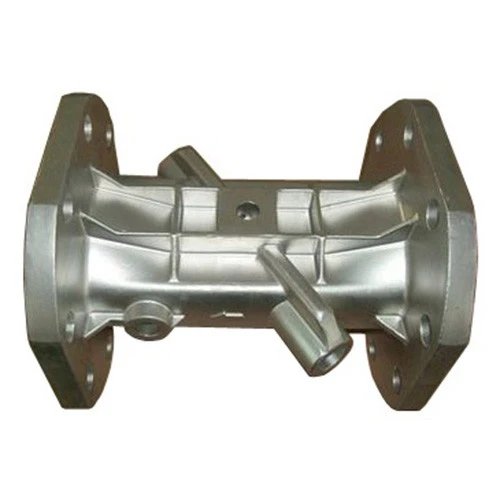

For example, intake and exhaust valves often have intricate geometries, including tapered stems and complex head shapes. Investment casting allows for the creation of these exact shapes, ensuring optimal airflow through the engine. The process can also incorporate features such as hard - facing coatings on the valve seats to enhance wear resistance. Our company offers Stainless Steel Casting Valve Parts for engines, which are made from high - grade stainless steel, providing excellent corrosion resistance and high - temperature performance.
In addition to the valves themselves, investment casting is used for other engine - related valve components, such as valve guides and valve keepers. Valve guides ensure the proper alignment of the valves, while valve keepers hold the valves in position. These components need to be precisely manufactured to fit within the engine assembly. Investment casting enables the production of these small, yet critical parts with the necessary accuracy and tight fit.
2. Transmission Systems
The transmission system is responsible for transferring power from the engine to the wheels. Valves are used in automatic transmissions to control the flow of hydraulic fluid, which in turn controls the shifting of gears. Investment casting is an ideal manufacturing method for these hydraulic valves due to its ability to create parts with complex internal passages.
In an automatic transmission, the hydraulic valves need to precisely regulate the pressure and flow of fluid to ensure smooth and efficient gear shifts. The investment casting process can produce valves with intricate channels and ports, allowing for precise control of the hydraulic system. Our Investment Casting Valve Spare Parts used in transmission systems are designed to meet strict quality standards. They are made with high - strength materials and are engineered to withstand the high - pressure and high - temperature environment of the transmission.
Moreover, the investment casting process can be used to create valve bodies, which are the main housing components for the hydraulic valves in the transmission. Valve bodies have a complex layout of channels and cavities, and investment casting can accurately replicate these features, ensuring proper operation of the entire transmission system.
3. Emission Control Systems
With the increasing focus on environmental protection, emission control systems in automobiles have become more and more important. Valves play a key role in these systems, regulating the flow of exhaust gases and ensuring compliance with emission standards.
One of the key components in emission control is the exhaust gas recirculation (EGR) valve. The EGR valve reduces nitrogen oxide (NOx) emissions by redirecting a portion of the exhaust gas back into the engine's intake manifold. Investment casting is used to manufacture EGR valves because it can create parts with precise flow control capabilities. The valve needs to open and close accurately to regulate the amount of exhaust gas being recirculated, and investment casting can produce valves with the necessary precision and reliability.
Another important application is in the evaporative emissions control system. This system prevents the release of fuel vapors into the atmosphere. Valves in this system are responsible for controlling the flow of vapors between the fuel tank, charcoal canister, and the engine. Investment casting can create these valves with the required airtightness and durability, ensuring the proper functioning of the evaporative emissions control system. Our Valve Parts Lost Wax Casting technology is well - suited for producing these emission - control valves, as it can achieve high - quality castings with excellent surface finish and dimensional accuracy.
4. Fuel Systems
In modern automotive fuel systems, valves are used to control the flow, pressure, and injection of fuel. Investment casting is used to manufacture various fuel - system valves, including fuel injectors, fuel pressure regulators, and check valves.
Fuel injectors are responsible for precisely metering and spraying fuel into the engine's combustion chambers. They require extremely high levels of precision in terms of fuel flow rate and spray pattern. Investment casting can produce the complex internal structures of fuel injectors, ensuring accurate fuel delivery. The process can also create the small, intricate nozzles that are essential for proper fuel atomization.
Fuel pressure regulators maintain a constant fuel pressure in the fuel system. They need to be able to accurately sense and adjust the pressure in response to the engine's operating conditions. Investment casting can create the bodies and internal components of fuel pressure regulators with the necessary precision and stability. Check valves in the fuel system prevent the backflow of fuel, and investment casting can produce these valves with tight sealing properties and reliable operation.
5. Suspension and Brake Systems
While less commonly known, valve parts investment casting also has applications in suspension and brake systems. In suspension systems, valves can be used in active suspension systems to control the flow of hydraulic fluid, adjusting the damping characteristics of the shocks and struts. This allows for a more comfortable and stable ride by adapting to different road conditions and driving styles.
In brake systems, valves are used in anti - lock braking systems (ABS) and electronic stability control (ESC) systems. These valves control the pressure of the brake fluid, preventing the wheels from locking up during sudden braking or maintaining vehicle stability during cornering. Investment casting can produce the small, high - precision valves required for these safety - critical systems. The ability to create parts with consistent dimensions and excellent mechanical properties is crucial for ensuring the reliable operation of these systems.
Conclusion and Invitation to Contact
In conclusion, valve parts investment casting is an indispensable manufacturing process in the automotive industry. Its ability to produce complex, high - precision, and reliable valve components is essential for the performance, efficiency, and safety of modern vehicles. Whether it is in the engine, transmission, emission control, fuel system, or suspension and brake systems, investment - cast valve parts play a vital role.
As a valve parts investment casting supplier, we are committed to providing the highest - quality products to our customers in the automotive industry. Our advanced investment casting technology, combined with our experienced engineering team, enables us to meet the most stringent requirements of our clients. If you are in the automotive industry and are looking for reliable, high - quality valve parts, we would love to engage in a procurement discussion with you. Please feel free to seek further information and initiate a partnership for your automotive valve - parts needs.
References
- Smith, J. (2018). Automotive Manufacturing Processes. Publisher: XYZ Press.
- Johnson, R. (2019). Valve Technology in Modern Vehicles. Journal of Automotive Engineering, 45(2), 123 - 135.
- Brown, A. (2020). Precision Casting for Automotive Components. Proceedings of the International Conference on Automotive Manufacturing, 156 - 162.