




Can auto parts precision casting be used for prototyping?
 Jun 30, 2025|
Hey there! As a supplier of Auto Parts Precision Casting, I often get asked if auto parts precision casting can be used for prototyping. Well, let's dive right into it and explore this topic.
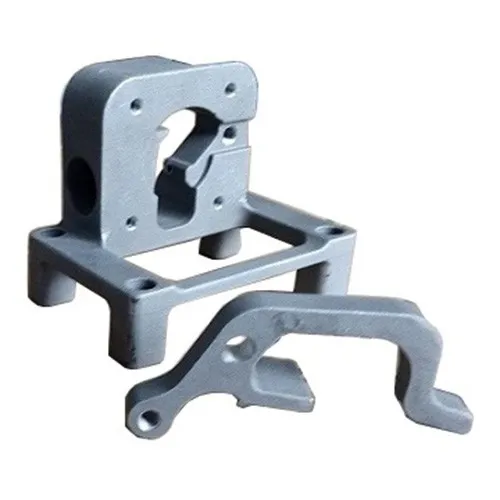
First off, what exactly is auto parts precision casting? It's a manufacturing process that allows us to create highly detailed and accurate auto parts. We use a mold to shape molten metal into the desired form, and this method can produce parts with very tight tolerances. It's a popular choice in the automotive industry because it can create complex geometries that might be difficult or impossible to achieve with other manufacturing methods.
Now, onto the big question: Can it be used for prototyping? The short answer is yes, and there are several good reasons for this.
One of the main advantages of using auto parts precision casting for prototyping is the level of detail it can offer. When you're developing a new auto part, you need to be able to see exactly how it will look and function. Precision casting can reproduce even the smallest features of a design, giving you a very accurate representation of the final product. This means you can spot any potential issues early on and make necessary adjustments before moving on to full - scale production.
Another benefit is the material properties. In precision casting, we can use a variety of metals, such as aluminum, steel, and stainless steel. Different metals have different properties, like strength, corrosion resistance, and weight. For prototyping, this allows you to test how different materials will perform in the real - world application of the auto part. For example, if you're designing a part that needs to be lightweight but still strong, you might choose aluminum for the prototype. You can then evaluate its performance and decide if it's the right material for mass production.
Cost - effectiveness is also a factor. While the initial setup costs for precision casting can be a bit high, it can actually save you money in the long run for prototyping. Compared to some other methods, precision casting can produce multiple prototypes relatively quickly and with a high level of consistency. This means you can get a good number of test parts without having to spend a fortune on individual machining or fabrication for each one.
Let's talk about some of the types of auto parts that can be prototyped using precision casting. Engine components are a prime example. Parts like cylinder heads, pistons, and connecting rods require very high precision and accurate dimensions. Precision casting can create these parts with the necessary tight tolerances, allowing you to test how they will perform in the engine.
Transmission parts are another area. Gears, shafts, and clutch components can all be prototyped using precision casting. These parts need to fit together perfectly and withstand high levels of stress. By creating prototypes through precision casting, you can ensure that the parts will work well in the transmission system.
Now, I'd like to mention some of the products we offer at our company. You can check out our Automotive Casting Spare Parts on our website. These are high - quality cast parts that are suitable for both prototyping and actual use in vehicles. We also have Stainless Steel Casting Automotive Spare Parts and Stainless Steel Casting Automotive Spare Parts which offer excellent corrosion resistance and durability.
Of course, there are some limitations to using precision casting for prototyping. The lead time can be a bit longer compared to some rapid prototyping methods. Since precision casting involves creating a mold and then casting the part, it takes time to set up the process. However, the accuracy and quality of the prototypes usually make up for this.

Also, the size of the parts can be a limiting factor. There are practical limits to how large a part we can cast using precision casting. If you're working on a very large auto part, you might need to consider other methods. But for most common auto parts, precision casting is a great option.
In conclusion, auto parts precision casting is definitely a viable option for prototyping. It offers high - precision, a wide range of material choices, cost - effectiveness, and the ability to create complex parts. Whether you're an automotive engineer, a designer, or a manufacturer, using precision casting for prototyping can help you develop better auto parts.
If you're interested in using auto parts precision casting for your prototyping needs, we'd love to hear from you. We have a team of experts who can guide you through the process, from design to final production. Just reach out to us and we'll work with you to create the perfect prototypes for your auto parts.
References
- Automotive manufacturing textbooks
- Industry research reports on precision casting
- Technical papers on auto part prototyping methods