




What are the disadvantages of aluminum investment casting?
 Aug 01, 2025|
 Hey there! I'm a supplier in the aluminum investment casting industry. Over the years, I've seen firsthand the ins and outs of this manufacturing process. While aluminum investment casting has its fair share of advantages, like the ability to create complex shapes with high precision, it's not all sunshine and rainbows. In this blog, I'm going to share some of the disadvantages of aluminum investment casting that you should be aware of.
High Initial Costs
One of the biggest drawbacks of aluminum investment casting is the high initial costs. Setting up the investment casting process requires a significant amount of capital. You need to create wax patterns, which often involve the use of expensive molds. These molds are typically made through a meticulous process that can be time - consuming and costly. For instance, if you want to produce a new part, you have to design and fabricate a custom mold for the wax pattern. This mold - making process can involve machining, which requires specialized equipment and skilled labor.
The investment casting process also involves multiple steps of creating ceramic shells around the wax patterns. The materials used for these ceramic shells, such as refractory materials and binders, can be quite expensive. Additionally, the equipment needed for melting the aluminum, pouring it into the ceramic shells, and subsequent finishing processes like grinding and polishing also add to the initial investment. As a result, if you're a small - scale manufacturer or a startup, the high upfront costs can be a major deterrent. Check out our Aluminum Investment Casting Products to see the kind of parts we produce, but keep in mind the initial cost factor.
Limited Production Volume
Aluminum investment casting is not the most efficient method when it comes to high - volume production. The process is relatively slow compared to other casting methods like die - casting. Each wax pattern has to be individually made, and the ceramic shell building process is also time - consuming. It can take hours or even days to complete a single batch of parts, depending on their complexity.
If you need a large number of parts in a short period, aluminum investment casting might not be the best option. For high - volume production, other methods can produce parts at a much faster rate. For example, die - casting can produce multiple parts in a single cycle, while investment casting has to go through the entire process for each individual part or a small group of parts at a time. So, if you're in an industry where you need to meet high - volume demands quickly, you might want to think twice before choosing aluminum investment casting. Our Lost Wax Casting Aluminum Parts are made through this process, and you can see the level of detail, but it comes with limitations in terms of production speed.
Surface Finish and Porosity Issues
Although aluminum investment casting can produce parts with a relatively good surface finish, there are still some potential issues. Sometimes, the surface of the cast parts can have defects such as roughness, pits, or inclusions. These defects can occur due to various reasons, such as improper ceramic shell preparation, impurities in the aluminum alloy, or problems during the pouring process.
Porosity is another common problem in aluminum investment casting. Porosity refers to the presence of small holes or voids in the cast part. It can be caused by gas entrapment during the melting and pouring of the aluminum, or shrinkage during solidification. Porosity can weaken the mechanical properties of the part, making it less reliable. To reduce porosity, additional processes like heat treatment or hot isostatic pressing (HIP) might be required, which add to the cost and time of production.
Design Constraints
Even though aluminum investment casting is known for its ability to create complex shapes, there are still some design constraints. For example, very thin - walled sections can be difficult to cast. The molten aluminum might not flow properly into these thin sections, leading to incomplete filling or defects. Also, sharp corners and edges can cause problems during the solidification process, as they can lead to stress concentrations and potential cracking.
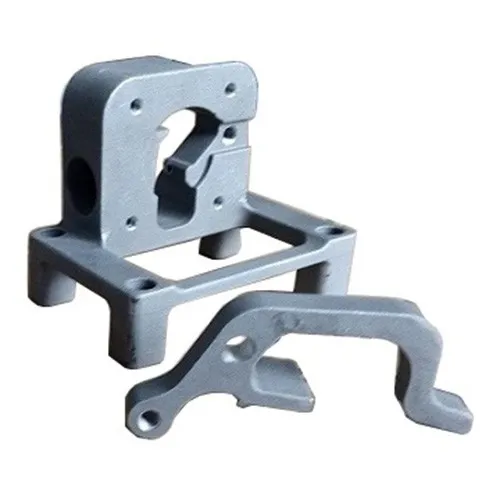

Designers need to take into account the shrinkage rate of the aluminum alloy during solidification. If the design doesn't allow for proper shrinkage, it can result in distorted parts. So, while you can achieve a high level of detail, there are limitations that need to be considered during the design phase. You can learn more about the process on our Aluminum Investment Casting page, and keep these design constraints in mind when working on your projects.
Environmental Impact
The aluminum investment casting process has an environmental footprint. The melting of aluminum requires a significant amount of energy, usually from fossil - fuel - based sources. This contributes to greenhouse gas emissions. Additionally, the disposal of the ceramic shells after the casting process can be a problem. These shells are often made of non - biodegradable materials, and if not properly managed, they can end up in landfills.
The chemicals used in the wax pattern making and ceramic shell building processes can also have environmental impacts. Some of these chemicals can be hazardous if not handled and disposed of correctly. As more and more companies are looking to reduce their environmental impact, the relatively high energy consumption and waste generation of aluminum investment casting can be a concern.
Quality Control Challenges
Ensuring consistent quality in aluminum investment casting can be a challenge. With so many steps involved in the process, there are multiple opportunities for errors to occur. From the wax pattern making to the final finishing, each step can affect the quality of the final part. For example, if the wax pattern has a defect, it will be transferred to the final cast part.
Inspecting the parts for defects can also be difficult. Non - destructive testing methods like X - ray or ultrasonic testing are often required to detect internal defects such as porosity or inclusions. These testing methods can be expensive and time - consuming. And even with these testing methods, it's not always possible to catch every single defect.
Conclusion
So, there you have it - the main disadvantages of aluminum investment casting. While it's a great process for creating complex and high - precision parts, it comes with its set of challenges. The high initial costs, limited production volume, surface finish and porosity issues, design constraints, environmental impact, and quality control challenges are all factors that you need to consider when choosing this manufacturing method.
However, despite these disadvantages, aluminum investment casting still has its place in many industries. If you're looking for parts with intricate designs and high - quality requirements, it can be a great option. We, as an aluminum investment casting supplier, are here to help you navigate through these challenges. If you're interested in our products and want to discuss your specific needs, feel free to reach out to us for a procurement discussion. We can work together to find the best solutions for your projects.
References
- Campbell, J. (2003). Castings. Butterworth - Heinemann.
- ASM Handbook Committee. (2008). ASM Handbook, Volume 15: Casting. ASM International.