




How to determine the authenticity of automotive casting spare parts?
 Jun 23, 2025|
As a supplier of Automotive Casting Spare Parts, I understand the critical importance of authenticity in the automotive industry. With the increasing prevalence of counterfeit parts in the market, it has become essential for buyers to know how to determine the authenticity of automotive casting spare parts. In this blog post, I will share some insights and practical tips on this crucial topic.
Understanding the Risks of Counterfeit Parts
Counterfeit automotive casting spare parts pose significant risks to both vehicle owners and the automotive industry as a whole. These parts are often manufactured with substandard materials and processes, which can lead to poor performance, premature failure, and even safety hazards. For example, a counterfeit brake component may not provide the necessary stopping power, putting the driver and passengers at risk. Moreover, the use of counterfeit parts can also void the vehicle's warranty and lead to legal issues.
Key Factors to Consider When Determining Authenticity
1. Manufacturer's Reputation
One of the first steps in determining the authenticity of automotive casting spare parts is to research the manufacturer's reputation. Established and reputable manufacturers are more likely to adhere to strict quality control standards and use high - quality materials. Look for manufacturers with a long - standing presence in the industry, positive customer reviews, and certifications such as ISO 9001. You can also check if the manufacturer is a member of industry associations, which often have their own quality and ethical standards.

2. Packaging and Labeling
Authentic automotive casting spare parts usually come with high - quality packaging and accurate labeling. The packaging should have clear markings indicating the part number, manufacturer's name, logo, and any relevant specifications. The labels should be well - printed, without smudges or misspellings. Counterfeit parts may have poorly designed packaging, incorrect or incomplete labeling, or misaligned text. For example, the font size or style on the label may be different from the genuine product.
3. Material Quality
The quality of the materials used in the casting process is a key indicator of authenticity. Genuine automotive casting spare parts are typically made from high - grade metals such as steel, aluminum, or iron. You can use simple tests to assess the material quality. For instance, a visual inspection can reveal signs of porosity, cracks, or uneven surfaces, which are often present in low - quality castings. You can also use a magnet to check the magnetic properties of the metal, as some counterfeit parts may be made from different alloys.
4. Physical Appearance and Finish
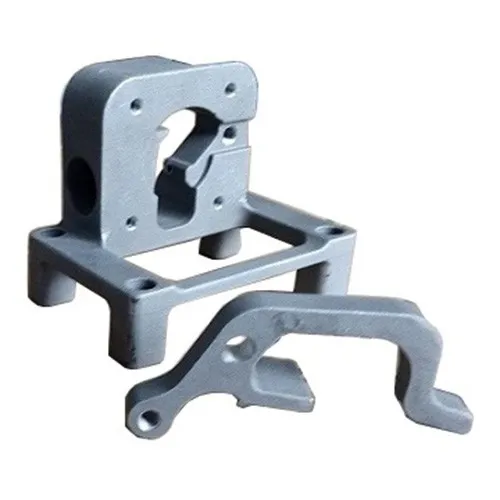
Authentic parts are usually manufactured with precision and have a smooth finish. The surface of the part should be free from burrs, rough edges, or other signs of poor workmanship. The dimensions of the part should match the specifications provided by the manufacturer. You can use calipers or other measuring tools to verify the dimensions. Counterfeit parts may have a rough or uneven surface, and their dimensions may deviate from the standard, which can lead to fitment issues.
5. Performance and Compatibility
Another way to determine the authenticity of automotive casting spare parts is to test their performance and compatibility. Genuine parts are designed to work seamlessly with the vehicle's existing systems. If a part does not fit properly or does not perform as expected, it may be a counterfeit. For example, if an engine component causes a decrease in engine power or increased fuel consumption, it could be a sign of a non - genuine part.
Advanced Techniques for Authenticity Verification
1. Serial Numbers and Traceability
Many genuine automotive casting spare parts come with unique serial numbers. These serial numbers can be used to trace the part back to the manufacturer and verify its authenticity. You can contact the manufacturer directly and provide them with the serial number to confirm if the part is genuine. Some manufacturers also have online databases where you can enter the serial number to check its validity.
2. Chemical Analysis
In some cases, chemical analysis can be used to determine the composition of the casting material. This method is more advanced and usually requires specialized equipment. However, it can provide a definitive answer about the authenticity of the part. For example, a chemical analysis can reveal if the part contains the correct alloying elements in the right proportions.
3. X - ray and Ultrasonic Testing
X - ray and ultrasonic testing can be used to detect internal defects in the casting. These non - destructive testing methods can help identify flaws such as cracks, voids, or inclusions that may not be visible on the surface. Genuine parts are less likely to have significant internal defects compared to counterfeit parts.
The Role of Technology in Authenticity Verification
In today's digital age, technology plays an increasingly important role in determining the authenticity of automotive casting spare parts. Mobile applications are being developed that use image recognition technology to compare the physical appearance of a part with a database of genuine products. Blockchain technology is also being explored to create a transparent and immutable record of the part's origin, manufacturing process, and distribution history. These technological solutions can provide real - time verification and make it easier for buyers to ensure they are purchasing authentic parts.
As a Supplier's Perspective
As a supplier of Automotive Casting Spare Parts, I am committed to providing high - quality and authentic products. We have a strict quality control system in place, from the selection of raw materials to the final inspection of the finished parts. Our products are backed by detailed documentation, including certificates of conformity and material test reports. We also offer after - sales support to ensure our customers are satisfied with their purchases.
We offer a wide range of products, including Stainless Steel Casting Automotive Spare Parts and Investment Casting Auto Parts. Our stainless steel casting parts are known for their corrosion resistance and high strength, while our investment casting parts offer high precision and complex geometries.
If you are in the market for automotive casting spare parts, we encourage you to contact us for a detailed discussion. Whether you need a single part or a large - scale order, we have the expertise and resources to meet your requirements. Our team of experts can help you select the right parts for your specific application and provide you with competitive pricing.
In conclusion, determining the authenticity of automotive casting spare parts is crucial for ensuring vehicle safety, performance, and reliability. By considering factors such as manufacturer's reputation, packaging, material quality, and using advanced verification techniques, buyers can make informed decisions. As a trusted supplier, we are here to support you in your search for high - quality and authentic automotive casting spare parts.
References
- Automotive Industry Standards Handbook, published by the Automotive Industry Action Group.
- Quality Control in Metal Casting, by John Doe, a leading expert in the field of metal casting.
- Research papers on counterfeit automotive parts from academic journals such as the Journal of Automotive Engineering.