




What is the manufacturing process of automotive casting spare parts?
 Jun 23, 2025|
Hey there! I'm a supplier of Automotive Casting Spare Parts, and today I wanna take you through the manufacturing process of these essential components. It's a fascinating journey that involves a blend of art, science, and precision engineering.
1. Design and Pattern Making
The whole process kicks off with design. We work closely with our clients, whether they're car manufacturers or aftermarket suppliers, to understand their specific requirements. Using advanced 3D modeling software, our designers create detailed blueprints of the casting parts. These digital designs are crucial as they allow us to visualize the final product, make necessary adjustments, and ensure that all the technical specifications are met.
Once the design is finalized, it's time to make the pattern. Patterns are exact replicas of the final casting part and are typically made from wax or plastic. For high - precision parts, we often use the lost wax casting method. The wax patterns are created by injecting molten wax into a mold. This mold is carefully crafted to match the 3D design. The wax patterns are then assembled onto a gating system, which is like a network of channels that will later allow the molten metal to flow into the mold cavity. You can learn more about Automotive Spare Parts Lost Wax Casting.
2. Shell Building
After the wax patterns are ready, we move on to shell building. This is a multi - step process where we coat the wax assembly with a ceramic shell. First, the wax pattern is dipped into a slurry of fine ceramic powder and a binder. This creates a thin, even layer on the surface of the wax. Then, it's coated with a coarser ceramic sand, which helps to build up the thickness and strength of the shell.
The dipping and coating process is repeated several times until the shell reaches the desired thickness. After each coating, the shell is allowed to dry. This drying process is crucial as it helps to harden the ceramic and prevent any cracking or deformation. Once the shell is fully built, it is put into an oven to be fired at a high temperature. This firing process not only strengthens the shell but also melts out the wax, leaving behind a hollow cavity in the shape of the final casting part.
3. Melting and Pouring
Now comes the exciting part - melting and pouring. We carefully select the appropriate metal alloy for the casting based on the requirements of the part. For automotive applications, we often use materials like aluminum, steel, or stainless steel. Each alloy has its own unique properties, such as strength, corrosion resistance, and heat resistance.
The selected metal is loaded into a furnace and heated until it reaches its melting point. The furnace is carefully monitored to ensure that the temperature is just right. Once the metal is fully molten, it is poured into the pre - heated ceramic shell. The pouring process has to be done quickly and smoothly to prevent any air bubbles or defects in the casting.
If we're using stainless steel for the automotive parts, you can find more information about Stainless Steel Casting Automotive Spare Parts and Stainless Steel Casting Automotive Spare Parts.
4. Cooling and Shakeout
After the molten metal is poured into the shell, it needs to cool and solidify. The cooling rate is carefully controlled as it can have a significant impact on the microstructure and properties of the casting. If the cooling is too fast, the casting may develop internal stresses and cracks. If it's too slow, the grain size of the metal may become too large, reducing the strength of the part.
Once the casting has cooled and solidified, we perform a shakeout. This is where we remove the ceramic shell from the casting. The shell is usually broken away using mechanical means, such as vibrating the casting or using a hammer. After the shakeout, the casting is still attached to the gating system, so we need to cut it off.
5. Finishing and Quality Control
The casting is far from finished at this point. It goes through a series of finishing operations. First, we remove any excess material, such as the gates and risers, using cutting tools. Then, the surface of the casting is machined to achieve the required dimensions and surface finish. Machining operations may include milling, turning, and drilling.
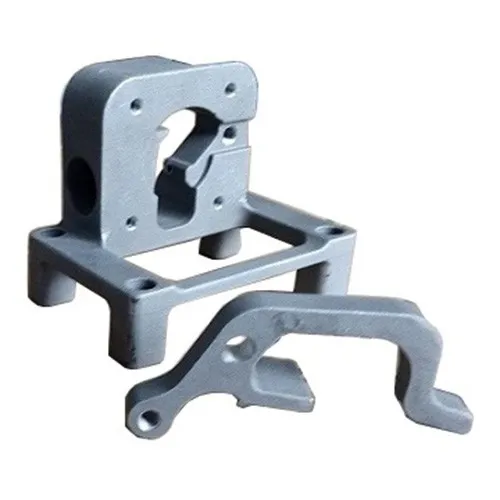

After machining, the casting undergoes a thorough quality control process. We use a variety of inspection methods, such as visual inspection, dimensional measurement using precision tools, and non - destructive testing like X - ray and ultrasonic testing. These tests help us to detect any internal defects, such as cracks or porosity, that may not be visible to the naked eye. Only after passing all the quality control checks is the casting considered ready for use.
6. Assembly and Delivery
Once the casting passes the quality control, it may be assembled with other components if required. For example, if it's a part of an engine assembly, it will be combined with other parts to form a complete sub - assembly. After assembly, the parts are carefully packaged to prevent any damage during transportation.
We then deliver the finished automotive casting spare parts to our clients. We understand the importance of timely delivery in the automotive industry, so we have a well - organized logistics system in place to ensure that the parts reach our clients on time.
Why Choose Our Automotive Casting Spare Parts?
We take pride in our manufacturing process. Our team of experienced engineers and technicians ensures that every step is carried out with the highest level of precision and quality. We use state - of the - art equipment and the latest technologies to produce casting parts that meet or exceed the industry standards.
Our automotive casting spare parts are known for their durability, performance, and reliability. Whether you're a large - scale car manufacturer or a small aftermarket repair shop, we can provide you with the right parts at competitive prices.
If you're in the market for high - quality automotive casting spare parts, we'd love to hear from you. We're always open to new business opportunities and are eager to work with you to meet your specific needs. Contact us to start a procurement discussion and see how we can help you with your automotive casting requirements.
References
- ASM Handbook, Volume 15: Casting, ASM International
- Automotive Materials and Manufacturing Processes, SAE International